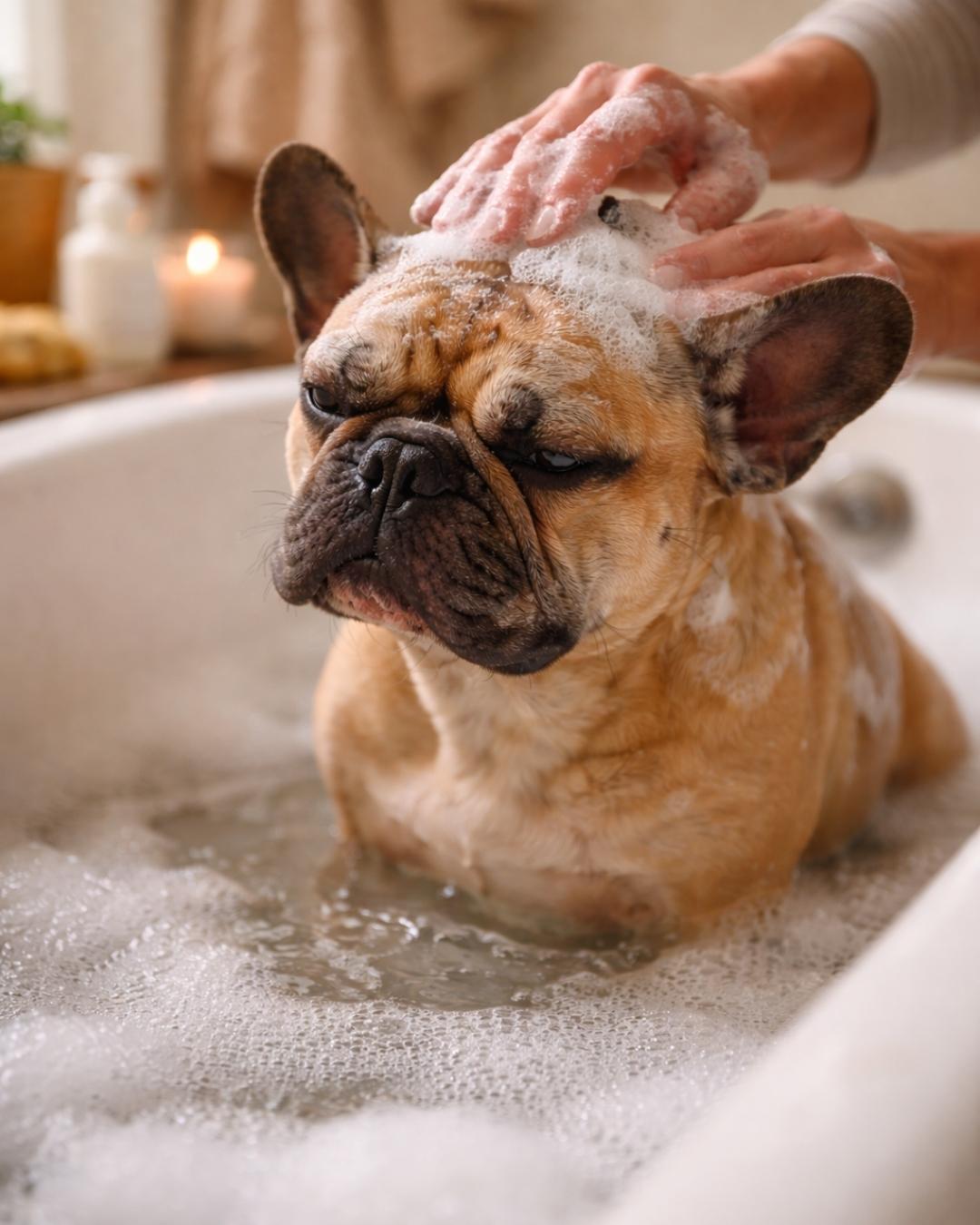
On a rainy morning in Manchester, Lucy wonders if it’s time to bathe Hugo, her playful Frenchie.
French Bulldogs live in a delicate space between hardy and sensitive
They are strong, yet their skin can be fragile
A tiny scratch can reveal how reactive their barrier really is
They play hard
But allergens, such as humidity, harsh shampoos, perfumes and synthetic fabrics can irritate their skin almost instantly
Although French Bulldogs are loved across the UK, many owners misunderstand one essential truth
Frenchies are not like other short haired dogs
Their skin reacts quickly
Their folds hold moisture
Their natural oils matter far more than their short coat suggests
Bathing too often, not often enough or with the wrong products quietly creates discomfort
The real question is not simply how often to bathe
It is how the skin behaves
And what rhythm it needs
Checking the folds after a bath tells the story
If they remain dry for forty eight hours
With no redness
No itching
The oils are balanced
For most Frenchies, bathing every three to four weeks
With weekly fold care
Creates a comfortable skin cycle
And from here
Practical care begins
“Bathing a Frenchie is not about cleanliness
It is about protecting the skin’s rhythm”
Where A Frenchie’s Skin Tells The Story
A healthy French Bulldog coat looks simple
Short, smooth, almost self cleaning
Yet beneath that simplicity lies a skin barrier that is easily disrupted
Most Frenchies share familiar traits
Mild dryness
Occasional itch
Moisture hiding in folds
Seasonal allergies
A tendency to produce yeast when oils are stripped
Wash too often, and oils disappear
Wash too rarely, and moisture settles
Yeast grows
Odour follows
Balance depends on lifestyle
Climate
Age
Overall health
An indoor Frenchie needs a different rhythm than one exploring parks, beaches or pollen-heavy fields
Once you understand this balance
Care becomes easier
UK dermatology vets consistently recommend bathing every three to four weeks
This rhythm allows oils to rebuild
Prevents dryness
Interrupts yeast before irritation begins
Keeps the natural Frenchie scent soft and gentle
This is a foundation
Not a rigid rule
Lifestyle always shapes the final frequency
Indoor habits
Bedding type
Air quality
Outdoor exposure
Some need less
Some need slightly more
Weekly bathing should only happen under veterinary instruction
And always avoid harsh shampoos, synthetic scents, and human products
French Bulldog Skin Care Stop Itching And Irritation Naturally
When Your Frenchie Needs More Frequent Washing
Life sometimes asks for more care
Rolling in mud
Running through pollen heavy grass
Spending weekends by the sea
These moments call for extra bathing
Frenchies with environmental allergies often benefit from biweekly baths during high pollen seasons
Bathing removes irritants from the skin
Targeted care matters too
Dogs with stubborn folds respond better to focused cleansing rather than full baths
Fragrance free micellar wipes or chlorhexidine pads calm problem areas without stripping oils
Puppies explore with faces and paws
Occasional rinsing helps
Full shampoo baths should stay gentle and spaced about once a month while the barrier develops
Good grooming is never rigid
It is responsive
Intuitive
Shaped by the skin
When Your Frenchie Needs Less Frequent Washing
Some French Bulldogs thrive with four or even five weeks between baths
Especially indoor dogs sleeping on natural bedding
Sheepskin changes everything
It absorbs moisture
Neutralises odours
Regulates temperature
Reduces bacteria
Frenchies resting on sheepskin often stay fresher
Smell cleaner
And require fewer baths
When the environment is gentle
The washing rhythm slows naturally
“A French Bulldog does not need frequent washing
It needs consistent care that listens”
French Bulldogs, Natural Oils, And The Truth About Odour
Every Frenchie has a scent
Earthy
Warm
Sometimes sweet
It usually begins in the folds of the paws, tail pocket, or ears
Bathing removes surface smell
Not the source
Odour begins with moisture
Malassezia yeast releases strong compounds when trapped in damp environments
Synthetic bedding holds humidity
Creating the perfect breeding ground
Sheepskin prevents this
It absorbs rather than traps
Allows airflow
Keeps skin breathing
This single change often transforms bathing frequency, scent and overall comfort
The bed
The folds
The washing rhythm
The skin barrier
The sleep quality
All become connected
Understanding The Core
A Vet Aligned UK Framework
Think in terms of health and habitat
UK vets, groomers, and dermatology specialists follow the same pillars
Skin health
Environment
Behaviour
Products
Daily habits
Washing is only one part of the system
Skin Condition And Sensitivity
Some Frenchie's are oily
Others develop flakes
Some produce yeast quickly
Some react to pollen instantly
Dogs with eczema or dermatitis follow medicated schedules prescribed by the vet
Dry skin benefits from longer breaks
Allergies may require seasonal rinsing
Frequency must follow sensitivity
Not generic rules
Is Sheepskin Safe For Dogs A Full Guide For UK Pet Owners
Lifestyle And Environment
Indoor Frenchie's in cities collect pollution
Outdoor Frenchie's meet grass and mud
Yet indoor dogs sleeping on synthetic bedding often develop more yeast
The healthiest Frenchie's share quiet habits
Natural bedding
Stable temperature
Gentle grooming
Predictable rhythms
Age And Coat Development
Puppies have thin, developing skin
Over washing creates lifelong sensitivity
Senior Frenchie's have thinner skin
They need Overwashingextra care
Every stage shifts the rhythm slightly
Medical Conditions And Vet Guidance
Dermatitis
Seborrhea
Fungal infections
Autoimmune issues
When these are present
The vet’s schedule is absolute
Never more
Never less
How To Wash A French Bulldog Properly
Frequency means nothing if the ritual is wrong
Water should be warm
Never hot
Never cold
Use fragrance free shampoo
Massage gently
Never scrub
Rinse thoroughly
At least ninety seconds
Folds need careful attention
This should feel like a spa ritual
Not a chore
Drying matters most
Moist folds become yeast
Damp tail pockets inflame
Wet coats under synthetic beds become odoury
A bath ends only when your Frenchie is fully dry
“Softness is a treatment, warm water is a healer, and a Frenchie remembers how you handle its skin”
Why Consistency Matters
Frenchie skin responds to rhythm
Predictable routines rebuild oils
Reduce irritation
Lower stress
Routines build trust
Trust builds comfort
Comfort builds health
When Underwashing Causes Problems
Moisture stays in folds
Yeast grows
Paws collect bacteria
Tail pockets inflame
Odour appears
This is not a normal Frenchie smell
It is an imbalance
The signs are quiet
But present
The Perfect Bathing Rhythm For Most UK Homes
Wash every three to four weeks
Clean folds weekly
Use gentle fragrance free products
Avoid over bathing
Avoid underbathing
Support skin with natural bedding
Let oils rebuild
Keep the rhythm steady
A Frenchie thrives in rituals that feel safe
Every three weeks
Gentle hands
Complete drying
Balanced oils
A Frenchie needs a place where it feels safe enough to fully relax
Regular bathing
Done correctly
Is part of that safety
“Regular care is quieter than treatment
And far more powerful”