Every Frenchie owner eventually realises how closely their dog's well-being is tied to their own. Imagine your Frenchie curled up on the sofa as the sun sets, their breathing calm and steady. You notice their chest rising and falling, and maybe you pick up on a small change, a sound or movement that seems different from before.
This daily habit not only brings you closer but also helps keep your dog healthy. French Bulldogs speak through their bodies long before they show anything dramatic.
A slower step
Heavier breath
Small pause before jumping
Subtle lick of the paws
Warmth in the ears
Tilt of the head that lingers longer than usual
These tiny moments reveal the sensitivity of this breed.
And once you understand, you start to see clearly that Frenchies are as strong in spirit as they are delicate in body.
This is why understanding their health problems is not fear.
It is preparation
Protection
Presence
It is the quiet promise every Frenchie deserves.
“A Frenchie’s health is a quiet dialogue between body and soul, and the more closely you listen, the safer their world becomes.”
The Nature of a French Bulldog Body
A French Bulldog is not built like other dogs.
Their compact frame
Their short nose
Their round, expressive eyes
Their muscular chest
Their soft folds
Their famously warm breath
Every part of them is beautiful.
And every part of them needs awareness.
Frenchies carry their emotions physically.
They feel the heat intensely
They digest slowly
They breathe differently
They age with tenderness
And small imbalances can grow quickly if unnoticed.
Understanding what can go wrong does not diminish the joy of owning a Frenchie.
It magnifies your ability to protect them.
Breathing Difficulties and Brachycephalic Issues
The first thing every Frenchie owner learns is the sound of their dog breathing.
The soft snorts
The gentle wheeze
The little hum as they sleep
The warm gust of air on your chest when they rest on you
These sounds are part of their charm
But also part of their vulnerability.
A Frenchie’s short nose means its airway is narrow.
Warm weather
Exercise
Excitement
Stress
Even a tight collar
Can make breathing more difficult.
A Frenchie who pauses mid-walk
Who breathes louder than normal
Who stretches their neck forward
Who refuses to climb stairs
Is sending you a message that their breathing needs care.
Awareness is your greatest tool.
Shade
Cool rooms
Slow walks
Soft harnesses
Calm energy
These small choices protect their life.
Skin Problems and Allergies
A Frenchie’s skin is a story of sensitivity.
Their folds
Their ears
Their paws
Their belly
All can become irritated by allergens in food, air, fabric, grass, or even water.
You may see them scratch lightly
Lick their paws
Rub their face on the carpet
Shake their head gently
Show pinkness around the belly or chest
Develop a yeasty smell in the folds
Their skin speaks quickly and honestly
Food allergies are common
Chicken
Beef
Grains
Dairy
Low-quality kibble
Environmental allergies are equally present
Pollen
Dust
Perfumes
Detergents
A Frenchie with itching is not misbehaving.
They are uncomfortable.
A balanced diet
Clean folds
Gentle baths
Air purification
Natural laundry products
High-quality food
Can transform their comfort entirely.
Ear Infections and Moisture Build-Up
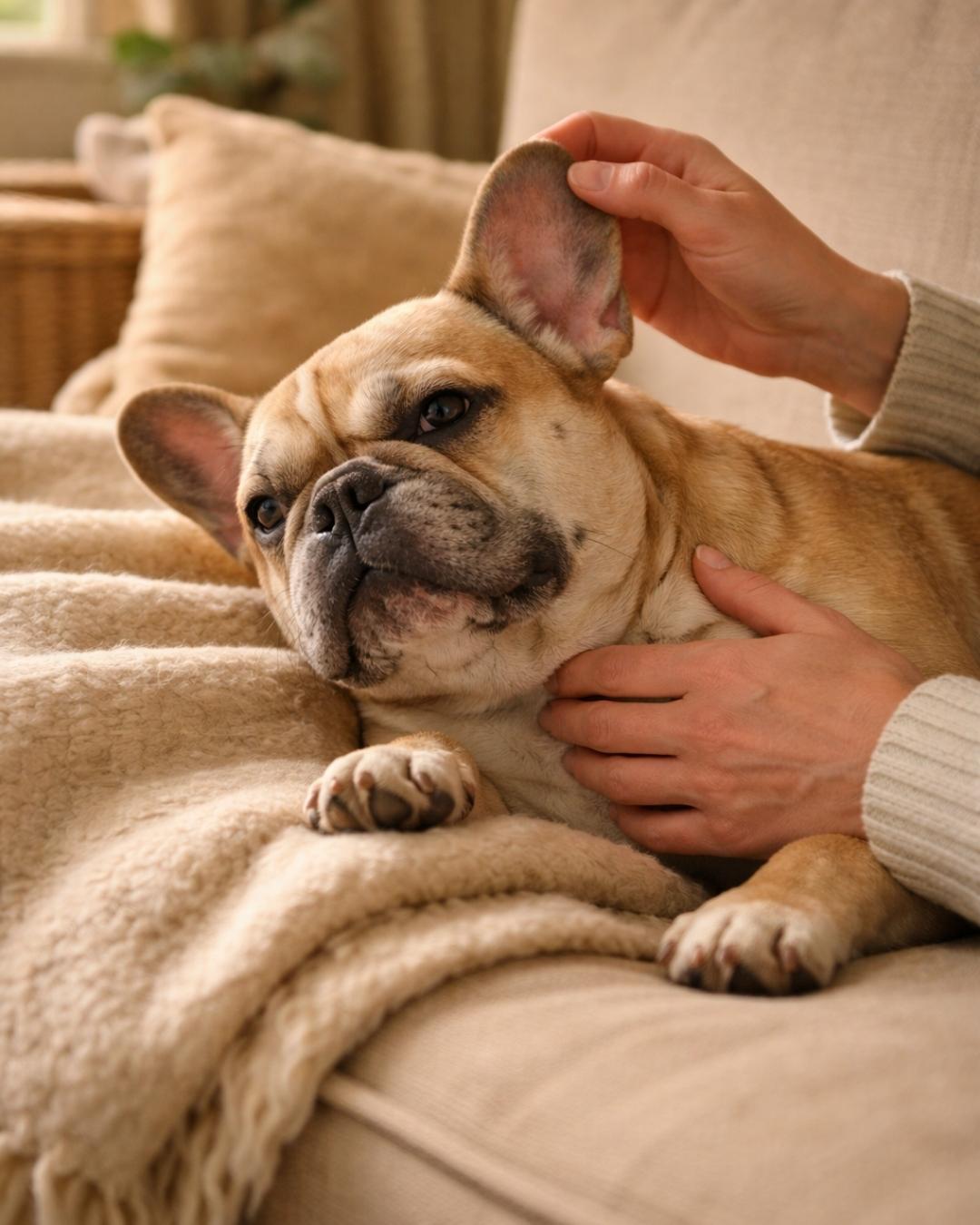
French Bulldogs have ears that can easily trap heat, moisture, and bacteria. If your Frenchie shakes its head, scratches behind the ear, tilts its head, avoids being touched, or develops a sweet or sour smell, these are signs of irritation.
Frenchies rarely show intense pain at first.
Instead, they whisper their discomfort through small behaviours.
Regular gentle cleaning
Keeping their head dry after baths
Noticing odours early
Can prevent infections from taking root.
Digestive Sensitivity and Stomach Issues
A Frenchie’s stomach is delicate.
They digest slowly
React quickly
And show discomfort through subtle signs
Skipping meals
Vomiting early in the morning
Frequent gas
Loose stools
Stomach sounds at night
Reluctance to eat certain textures
These are not random events.
They are signals of sensitivity.
Consistent feeding times
Warm meals
Slow food transitions
Avoiding artificial additives
High-quality limited-ingredient diets
Help keep digestion calm and your Frenchie comfortable.
Heat Sensitivity and Overheating
A Frenchie’s body holds heat easily.
Warm weather
Strong sunlight
Overheated rooms
Long car rides
Stress
Exercise
Excitement
All can cause their temperature to rise quickly.
A Frenchie that pants heavily
Seeks cold floors
Refuses to move
Breathes rapidly at rest
Is telling you they are too warm.
Shade
Cool mats
Gentle fans
Short walks
Avoiding midday heat
Are essential for their safety.
Their Health as a Conversation
Every Frenchie health problem is a message.
A quiet conversation between you and their body.
Their behaviour
Their breath
Their skin
Their steps
All communicate what they cannot say in words.
Health is not just about symptoms
When you notice early
When you respond gently
When you understand their patterns
You become not just their owner
But their protector.
A Moment of Reflection
Sit next to your Frenchie for a moment.
Watch them breathe.
Watch their eyes soften when they see you.
Watch the tiny movements that show comfort or discomfort.
Its presence
Awareness
Connection
Frenchies live in small signals.
And when you learn to read them,
You give them a life that feels safe, grounded, and loved.